First time using a bidet seat
A written version of the old site’s virtual bidet experience — what the first washes feel like, what to expect, and how not to flood the floor.
Published 2026-03-04 · Updated 2026-09-01 · 9 minute read
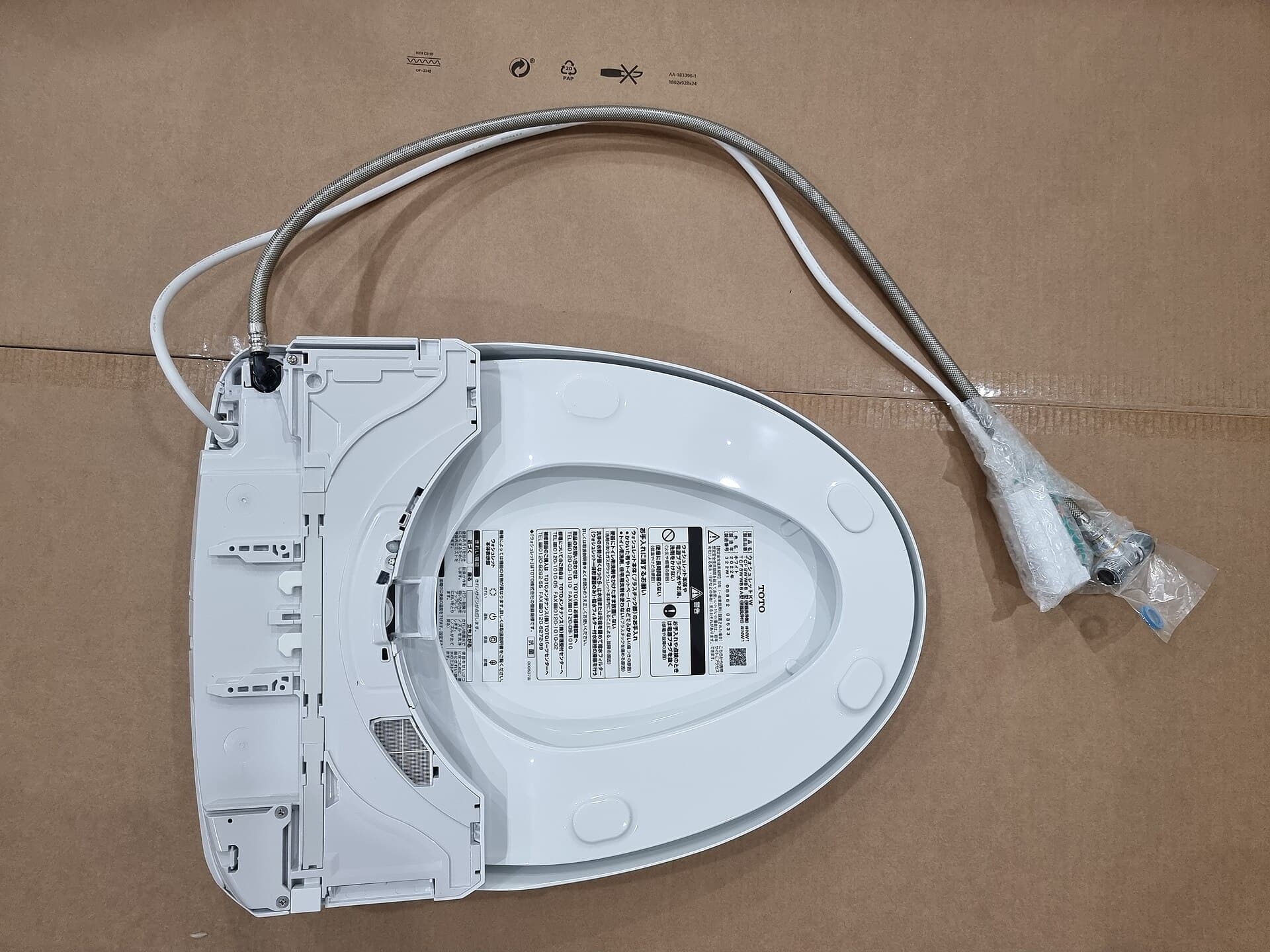
Photo: Toto Washlet TCF8WW88, bottom view by Benlisquare, via Wikimedia Commons, licensed CC BY-SA 4.0. Also listed on the image credits page.
The archived Australian Bidet site promised a “virtual bidet experience”. This is that page without the Flash animation: what happens when you sit down, press the pictogram, and hope you have not bought an expensive sprinkler.
If you have not bought anything yet, start with which bidet seat for you. If the seat is already on the pan, stay here.
Sit as you already sit
The nozzle is under you, not behind you like a garden tap. Sit back on the seat so the spray lands where paper used to go. Hovering is how water finds the floor and the back of your jeans.
Close the lid only after you are finished. Soft-close is not a hint to hide from the machine.
Start quieter than the demo
Hotel washlets are set to impress. Your seat should be set to keep you in the room. Lowest pressure, mid position, shortest cycle. Move the nozzle forward or back before you add power. The features glossary names the buttons; this is the order to touch them.
Warm water, if you have it, should feel like a shower you would actually take — not spa-hot. Heated seats can stay on low while you learn.
Drying is a separate skill
Air dryers are patient. Paper is faster and still gentler if you pat. People who cannot reach will care more about the dryer than you do; that is the plot of bidets for disability and independence.
Guests will stare at the remote. Leave a single sentence on a card: “Sit, press the rear-wash icon, stop, pat dry.” Anything longer becomes folklore.
What will feel strange
The first wash feels more intimate than a shower because you are not standing. That feeling goes. What remains is the absence of abrasion, which is the entire hygiene argument.
You will use too much water for a week. You will still use less paper. Do bidets save water in Australia is the numbers essay; your first week is not the sample size.
When the first use goes wrong
If the spray is fierce, you have a pressure or nozzle-fault problem — see common bidet problems. If the T-piece drips, that is plumbing, not technique: do you need a plumber. If skin stings, stop adding soap to the idea; read bidets and sensitive skin.
The goal of the first week is boredom. When the wash is as unremarkable as the tap, the seat is doing its job.
Questions readers actually ask
- Will I get water on the floor the first time?
- You might, if you hover or if the pressure is on a hotel-demo setting. Sit fully, start on the lowest wash, and keep a towel handy for the first two days.
- Do I still need toilet paper?
- Most Australian households keep a roll for drying or for guests. Many people pat dry after the wash rather than wiping as they used to.
- How long should a wash last?
- Twenty to forty seconds is plenty. If you are sitting through a long cycle, the pressure is probably too high or the aim is off.
Keep reading
- Heated bidet seats in Australia
Why a warm ring and warm water matter in a country that still builds unheated bathrooms, and when heat is wasted money.
- Bidet seat features explained
A plain-English map of wash modes, heaters, dryers, remotes and the buttons you can ignore on an Australian bidet seat.
- Electric versus non-electric bidet seats
Warm water, dryers and remotes against the quieter honesty of a cold-water seat that does not need a GPO.