Accessibility and independence
Bidets for disability and independence
How a bidet seat can reduce the need for another person’s hands, and what still belongs to an occupational therapist.
Published 2026-04-15 · Updated 2026-09-12 · 13 minute read
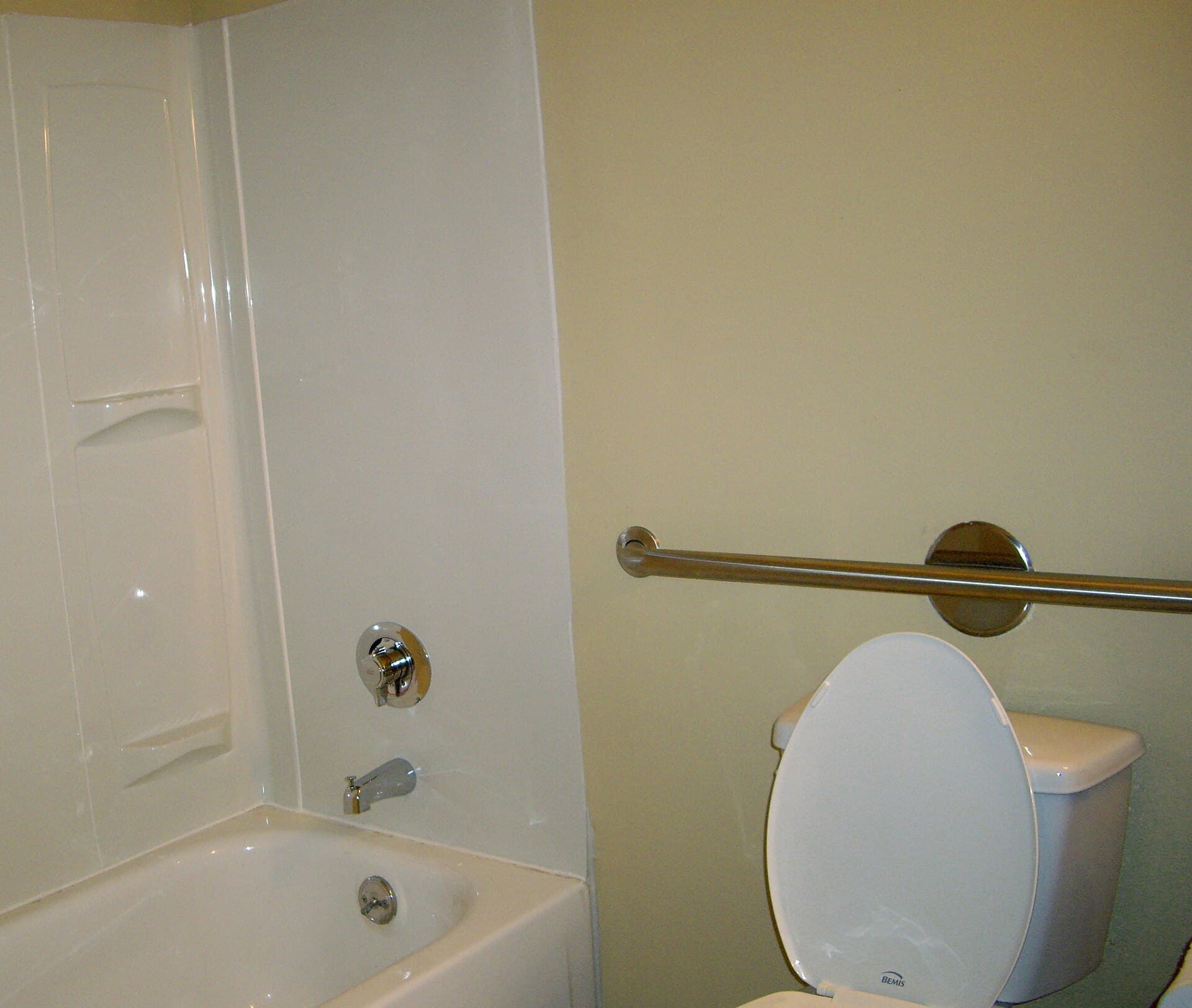
Photo: Grab bar by Gramody, via Wikimedia Commons, licensed CC BY-SA 2.0. Also listed on the image credits page.
The old Australian Bidet listings sat in disability directories for a reason. A seat that washes and dries can be the difference between finishing the job yourself and waiting for someone else to do the most private part of the day. That is not a lifestyle upgrade. That is independence.
It is also not a miracle fixture. Transfers, grab rails, a raised pan and a competent assessment still decide whether the bathroom is safe.
What independence looks like on a Tuesday
Less twisting. Less asking. Less skin damage from paper. A remote that a person with limited shoulder rotation can press. A dryer that means a carer can stand at the door instead of in it.
Those outcomes show up for spinal injury, arthritis, Parkinson’s, cerebral palsy, post-stroke weakness, and a long list of names that do not belong in a catalogue filter. The older Australians and carers essays are cousins of this one.
Features that earn their keep
Read bidet seat features explained with a ruthless pen:
- Dryer: yes if wiping is the barrier.
- Remote: yes if the side panel is a reach.
- Warm water: yes if cold water means the seat will be avoided.
- Soft-close: nice.
- Night light: nice.
- Enema mode: no.
Electric versus non-electric is usually settled the moment drying matters. Power then becomes a GPO question.
The bathroom is a system
A bidet seat on a pan you cannot transfer onto is sculpture. Rails, a raised seat height, and a wet-floor plan belong in the same conversation as the nozzle. Photos of Australian accessible rooms — and the accessibility hub — exist to keep the whole room in frame.
Installation still has to be legal. WaterMark and a licensed plumber are not optional because the user has a disability. They are more important.
Money and plans
NDIS funding for bidet seats is the dedicated money essay. Aged-care packages and private purchase live in carers and aged care. Do not let a salesperson write your goal statement.
If you are choosing among types rather than funding sources, which bidet seat for you and the buying guides hub will not waste a planning meeting.
Questions readers actually ask
- Are bidet seats considered assistive technology in Australia?
- They often function as assistive technology for personal hygiene. Whether a plan will fund one depends on the person’s goals, evidence and the right budget category — not on a sticker that says NDIS-ready.
- What features matter most for limited mobility?
- A remote or large controls, reliable wash, a dryer, and a seat that fits the pan without creating a transfer hazard. Heat is comfort; the dryer is independence.
- Can a bidet replace a support worker for toileting?
- Sometimes it reduces hands-on help. It does not automatically remove a support need, and it never removes the need for a safe transfer.
Keep reading
- Bidets after surgery or injury
Temporary bathrooms after hips, bowels, births and broken shoulders — how a bidet seat helps when reaching is the injury.
- Bidets for carers and aged care
What a bidet seat changes for the person who currently finishes someone else’s hygiene — at home, in a facility, or on a package.
- Bidets for older Australians
Ageing, arthritis and tired bathrooms — why a bidet seat is often the least dramatic change that still protects dignity.