Power points for electric bidet seats
How close a 240-volt GPO needs to be, why bathroom wiring rules matter, and why an extension lead under the mat is not a plan.
Published 2026-06-10 · Updated 2026-08-30 · 11 minute read
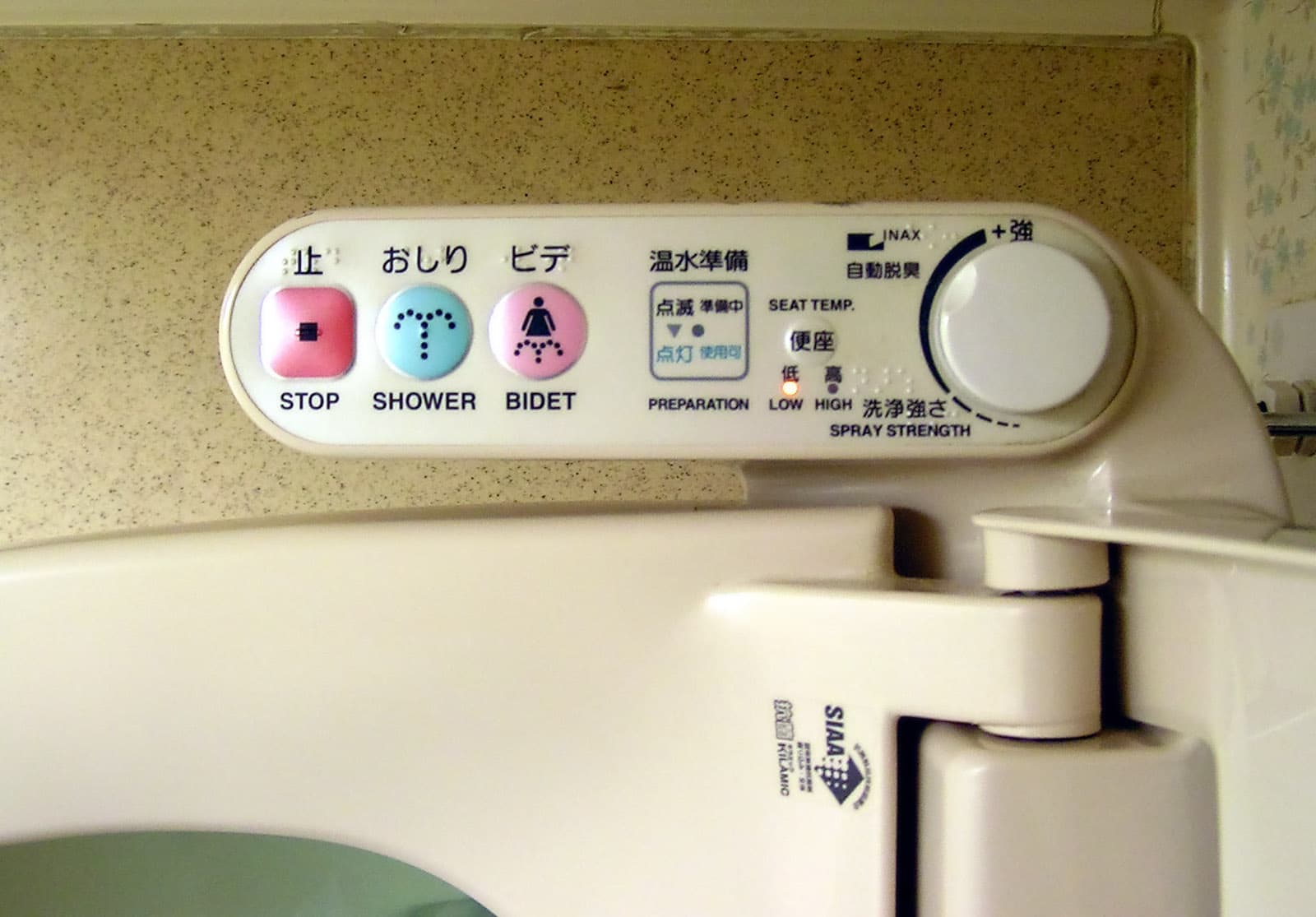
Photo: Modern Japanese toilet by Armin Kübelbeck, via Wikimedia Commons, licensed CC BY-SA 3.0. Also listed on the image credits page.
An electric bidet seat is a small appliance in the wettest room of the house. The wash is plumbing. The heat is electricity. Households remember the first and forget the second until someone walks in with a double adaptor and a look of optimism.
If you can avoid power entirely, non-electric seats still exist. If you want a dryer and warm water, budget a GPO.
What “nearby power” means
Manufacturers publish a lead length for a reason. The plug wants a wall, not a powerboard behind the pan. Measure from the seat’s exit point to an existing outlet. If the lead will stretch across a walkway, you do not have power. You have a trip.
Fitting the pan and this page are the same site visit in two trades.
Zones, RCDs and not inventing a standard
Australian bathrooms have rules about where outlets may sit relative to showers, baths and basins. An electrician will talk about zones and residual-current devices. You should let them. This publication will not draw a wiring diagram from a memory of AS/NZS 3000.
What we will say: no heaters in sockets that already smell warm, no adaptors on the floor, no “just for a few weeks”. Recoveries last longer than leads.
When the electrician should come first
New houses sometimes put a GPO behind the pan on purpose. 1990s ensuites almost never did. If you are renovating, put the outlet in the plan with the plumber. Doing it after the tiles is how invoices grow.
Aged-care and NDIS bathrooms should treat the outlet as part of the assistive-technology job. See NDIS funding and carers.
Heaters are why this page exists
Heated seats and tankless water heaters are the loads. A night light is not. If the circuit is already tired, say so.
Standby power is small. Faults are not. If the seat trips the RCD, stop and read common problems before you reset it into a puddle.
Choosing whether you need this outlet at all belongs in which bidet seat for you. The installation hub keeps the plumber and the electrician in the same map.
Questions readers actually ask
- How close does the power point need to be?
- Most electric seats want a GPO within about 1.5 to 1.8 metres of the lid, on the path the manufacturer drew. Measure the supplied lead. Do not assume a Japanese hotel’s wiring.
- Can I use an extension cord?
- No. Bathrooms and trailing leads are a bad pair. Have an electrician install a suitable outlet on an RCD-protected circuit.
- Do I need a special bathroom outlet?
- You need an outlet that meets Australian wiring rules for the zone it sits in. That is an electrician’s call, not a marketplace FAQ.
Keep reading
- Backflow prevention and bidets
Why a spray over a toilet pan is a drinking-water problem, and how certified douche seats are built to keep the two apart.
- Fitting a bidet seat to an Australian toilet
How to measure a close-coupled Australian pan — bolt spacing, D-shape lids, concealed cisterns — before you buy a seat that will not sit.
- Do you need a plumber to install a bidet
When a licensed plumber is the law, when an electrician joins the invoice, and why overseas DIY videos fail Australian bathrooms.