Accessibility and independence
NDIS funding for bidet seats
How bidet seats show up in NDIS conversations — assistive technology, home modifications, evidence, and the claims a brochure cannot make.
Published 2026-04-22 · Updated 2026-09-15 · 13 minute read
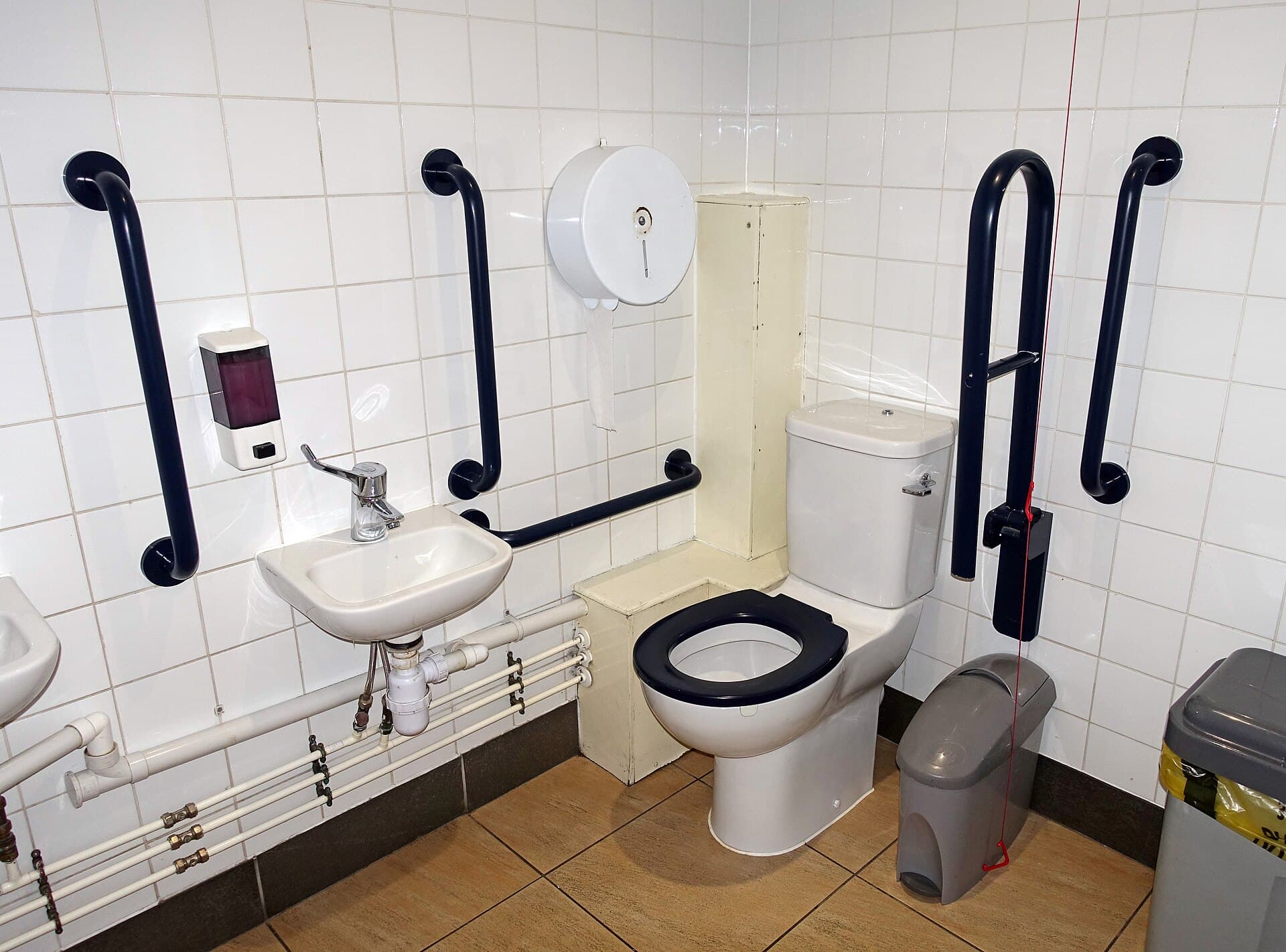
Photo: Accessible toilet by Tiia Monto, via Wikimedia Commons, licensed CC BY-SA 3.0. Also listed on the image credits page.
Australian Bidet’s older public listings sat under NDIS registration groups for personal-care products and home modification. That history is why this desk still writes about plans. It is not why a seat appears on a statement of supports. Plans are individual. Brochures are not.
This page is orientation, not advice about your plan. The NDIA’s current guidance outranks anything a website from 2026 remembers.
Reasonable and necessary is a sentence, not a sticker
A seat is easier to argue when you can say, in ordinary English:
- I cannot wipe reliably.
- A carer currently finishes hygiene.
- A wash and dry would let me do that myself, or reduce the hands-on time.
- The toilet I have will take this seat.
- A licensed plumber can connect a WaterMark product.
That last line is not bureaucracy for its own sake. An uncertified connection is a problem for the plumber and for the house. Read WaterMark certification.
Evidence that actually helps
Occupational therapy notes that mention transfers, reach, skin, dignity and carer strain. Quotes from a supplier that separate the seat, the plumbing, and the electrical work. Photos of the pan and the nearest GPO — the same photos fitting a seat and power points ask you to take.
Do not submit a lifestyle review of a Japanese hotel. Japanese washlets versus Australian seats is useful context. It is not a plan document.
Categories people mix up
Personal care consumables are not a seat. Capital assistive technology might be. Home modification might be the GPO or the rails. Getting the bucket wrong delays everyone. Your support coordinator or plan manager should name the bucket; a marketplace seller should not.
Bidets for disability and independence explains the daily outcome you are funding. Carers and aged care covers non-NDIS money.
After the seat is approved
Installation is still a trade. Do you need a plumber is usually yes. Training the participant and the support workers is part of the purchase — use the first-time guide as a script, not as a substitute for the OT.
If the plan says no, the seat can still be the right object. How much a bidet costs and which bidet seat for you remain available to households paying privately. The accessibility hub does not close because a category was wrong.
Questions readers actually ask
- Will the NDIS automatically fund a bidet seat?
- No. Funding depends on the participant’s plan, goals, evidence that the seat is reasonable and necessary, and the correct support category. A product page is not evidence.
- Is a bidet seat assistive technology or a home modification?
- Often it is discussed as assistive technology for personal care. Electrical work or plumbing changes can look like home modification. Your planner, OT and plan manager should not guess — they should classify it.
- Do I need an occupational therapist report?
- For many plans, yes or it helps a great deal. An OT can tie the seat to transfers, hygiene goals and carer reduction, which a catalogue cannot do.
Keep reading
- Bidets after surgery or injury
Temporary bathrooms after hips, bowels, births and broken shoulders — how a bidet seat helps when reaching is the injury.
- Bidets for carers and aged care
What a bidet seat changes for the person who currently finishes someone else’s hygiene — at home, in a facility, or on a package.
- Bidets for older Australians
Ageing, arthritis and tired bathrooms — why a bidet seat is often the least dramatic change that still protects dignity.