Accessibility and independence
Bidets for carers and aged care
What a bidet seat changes for the person who currently finishes someone else’s hygiene — at home, in a facility, or on a package.
Published 2026-05-06 · Updated 2026-09-02 · 12 minute read
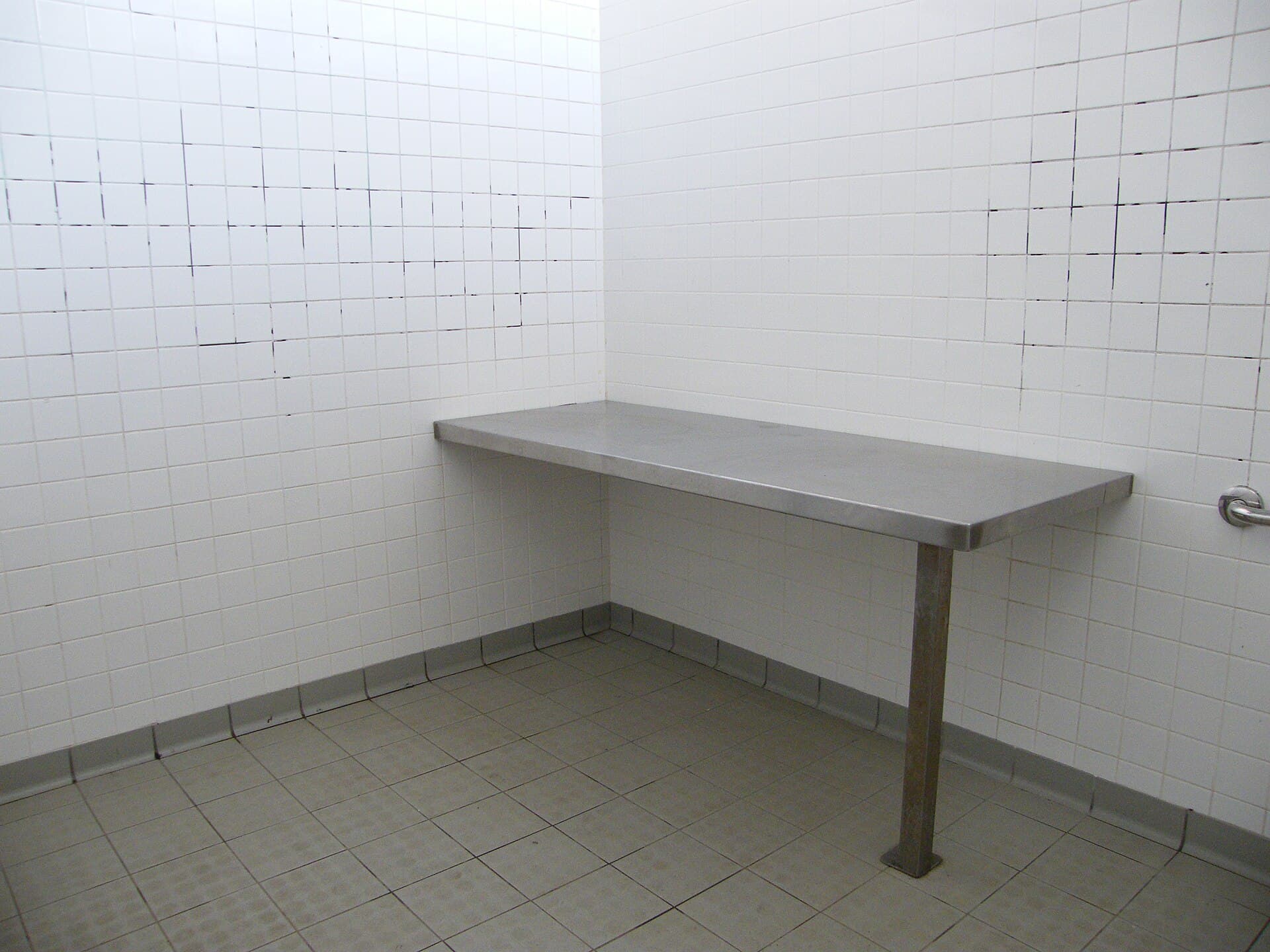
Photo: Accessible shower change table, Moora Park by John Robert McPherson, via Wikimedia Commons, licensed CC BY-SA 4.0. Also listed on the image credits page.
Carers know the part of the job that never makes the brochure: the wipe, the twist, the skin that tears, the dignity that both people lose for a minute. A bidet seat is one of the few pieces of hardware that can give that minute back.
It is not a staffing model. It is a nozzle, a dryer, and a chance to stand at a more respectful distance.
What changes in a home
If the person can sit safely, a remote wash and a dryer can turn a two-handed task into a watch-and-assist task. That matters for spouses with their own bad backs. It matters for support workers whose shift is a list of intimate jobs.
Read this beside disability and independence and older Australians. The seat is the same. The politics of who asked for it are not.
What does not change
Transfers. Hoists. Pads. The need for a second person when a second person is the safe number. A seat that adds height or a slippery hose can make the room worse. Fitting and plumbing are carer-safety issues.
Infection control is cleaning. Maintenance should be on the same chart as the shower chair.
Facilities and shared bathrooms
Aged-care homes and group houses have extra questions: whose remote, whose cleaning, whose electrical circuit, whose WaterMark file. A facility plumber will care about backflow even if the lifestyle coordinator does not.
Do not install a consumer seat in a shared bathroom and hope. Write a one-page protocol. Use the first-time guide as staff induction, then add the home’s own infection rules.
Paying for it without a fight
NDIS funding if the person is a participant. Home-care packages if they are not. Private money when the wait will be longer than the back pain. Cost should include trades, not just the lid.
Choosing the lid still goes through which bidet seat for you. Carers deserve a vote on the remote. They are the ones who will be asked to find the dryer icon at 2am.
More of this desk lives in the accessibility hub. Hygiene that is not about care labour sits in health and hygiene.
Questions readers actually ask
- Do bidet seats reduce carer strain?
- They can reduce bending, wiping and the time spent in another person’s intimate space. They do not remove transfers, pads or the need for two-person lifts.
- Can a residential facility install them?
- Some do, especially in new builds. Infection control, plumbing certification and staff training decide it, not a single resident’s preference alone.
- Who pays in home care?
- Sometimes a home-care package, sometimes the family, sometimes an NDIS plan. Get the category right before you order. The NDIS essay covers participants; this page covers the wider carer economy.
Keep reading
- Bidets after surgery or injury
Temporary bathrooms after hips, bowels, births and broken shoulders — how a bidet seat helps when reaching is the injury.
- Bidets for older Australians
Ageing, arthritis and tired bathrooms — why a bidet seat is often the least dramatic change that still protects dignity.
- NDIS funding for bidet seats
How bidet seats show up in NDIS conversations — assistive technology, home modifications, evidence, and the claims a brochure cannot make.