Fitting a bidet seat to an Australian toilet
How to measure a close-coupled Australian pan — bolt spacing, D-shape lids, concealed cisterns — before you buy a seat that will not sit.
Published 2026-06-03 · Updated 2026-09-10 · 12 minute read
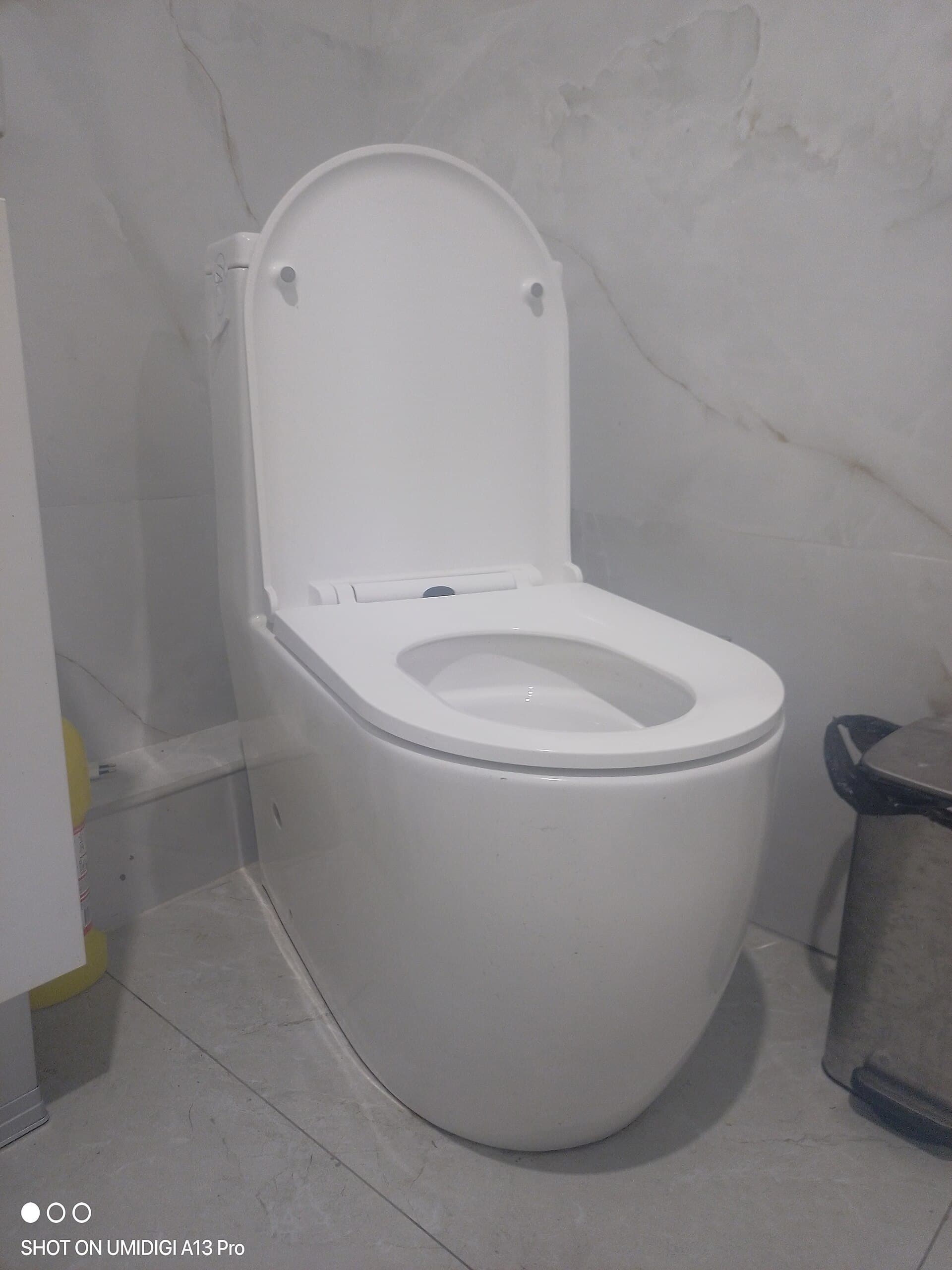
Photo: Flush toilet by Kantikkantemirgonov, via Wikimedia Commons, licensed CC0 1.0. Also listed on the image credits page.
Australian toilets are not a single shape. They are a family of close-coupled pans, a few back-to-walls, the occasional wall-hung, and a graveyard of 1970s rounds. A bidet seat that “fits most toilets” fits most toilets in the country it was photographed in.
Measure. Then talk to a plumber.
The five numbers that matter
- Distance between the centres of the seat bolts.
- Distance from the bolt line to the front of the rim.
- Width at the widest part of the bowl.
- How much flat landing the seat has behind the bolts.
- Distance from the cistern or wall to where a lid needs to open.
Photograph the pan from above and from the side. Those photos also help an NDIS quote and a distant adult child.
Shapes you will actually meet
D-shape / elongated is common in current Australian suites. Buy the matching lid.
Round / compact still exists in older houses and some small ensuites.
Back-to-wall and wall-hung hide the cistern. Hidden cisterns hide the stop tap. Hidden stop taps lengthen invoices.
Raised or extra-height pans used for accessibility can fight a standard bidet lid. Check that the seat does not create a forward slope that dumps someone onto the floor. That is an accessibility problem as much as a fit problem.
Water and power are part of fit
A beautiful lid on a pan with no accessible inlet is a sculpture. You need to see how the existing seat’s water flexi arrives. Electric seats add a lead and a GPO. Measure that path before you fall in love with a dryer.
WaterMark is not a dimension and still decides whether the fit is allowed to exist.
Attachments have their own geometry
An under-seat attachment wants a flat sandwich under the existing ring. Fancy sculpted seats often refuse. If you are a renter trying to keep the lid, measure the gap as carefully as a replacement seat.
After it is on
The lid should cover the rim without overhanging like a diving board. The nozzle should sit in the bowl, not on it. If the wash hits porcelain, you bought the wrong shape or you have not sat back — confirm both using the first-time guide.
Then return to which bidet seat for you with numbers instead of hope. The installation hub is the parent of this tape measure.
Questions readers actually ask
- What bolt spacing do Australian toilets use?
- Many domestic pans sit around 140 to 160 millimetres between seat-bolt centres. Measure yours. Do not assume an imported “universal” seat is universal.
- Will a bidet seat fit a D-shaped Australian pan?
- Often, if you buy a D-shape or elongated lid and check length from the bolts to the front rim. A round lid on a D-pan leaves a cold porcelain grin.
- Can I fit a seat to a wall-hung toilet?
- Sometimes, with access to the water connection and the right hoses. It is a plumber conversation, not a guarantee printed on a box.
Keep reading
- Backflow prevention and bidets
Why a spray over a toilet pan is a drinking-water problem, and how certified douche seats are built to keep the two apart.
- Power points for electric bidet seats
How close a 240-volt GPO needs to be, why bathroom wiring rules matter, and why an extension lead under the mat is not a plan.
- Do you need a plumber to install a bidet
When a licensed plumber is the law, when an electrician joins the invoice, and why overseas DIY videos fail Australian bathrooms.